


Sauna rituals from different cultures blend cleansing, relaxation, and social connection. Finnish saunas focus on ritual steam bathing and cooling for physical and mental renewal. Japanese sento and onsen emphasize mindfulness and natural settings.
Korean jjimjilbang offers holistic heat therapy with communal spaces. Russian banyas use intense steam and birch massages, while Turkish hammams highlight rhythmic cleansing in ornate steam rooms. These traditions influence today’s wellness practices, revealing deep cultural values behind their soothing heat ceremonies. Further insights uncover rich customs and meanings.
The History and Cultural Significance of Sauna Traditions Worldwide
How have sauna traditions evolved across diverse cultures around the world? From the steamy Russian banyas to the tranquil Japanese onsen, sauna practices reflect varied cultural values emphasizing purification, relaxation, and social bonding.
Historically, these rituals served as communal spaces for healing and spiritual renewal. In Korea, jjimjilbangs blend sauna with social leisure, while Turkish hammams combine cleansing with architectural beauty.
These global sauna traditions highlight humanity’s enduring desire for wellness and connection, influencing modern spa and wellness industries. Their legacy continues to inspire freedom through self-care and cultural exchange in contemporary sauna wellness rituals.
Today, these traditions also influence modern wellness facilities and sauna Malaysia centres that incorporate global sauna concepts into contemporary spa experiences.
Finnish Sauna Culture: Rituals and Social Connections in Wellness
Finnish sauna culture consistently ranks among the most iconic and enduring global sauna traditions. Rooted in centuries-old customs, it emphasizes ritualistic steam bathing followed by cooling off, often outdoors. This cycle supports physical cleansing and mental clarity, while fostering strong social bonds.
Traditionally, saunas serve as communal spaces where conversations flow freely, promoting equality and connection. The practice encourages individual freedom within a shared environment, allowing participants to relax authentically. Finnish sauna rituals exemplify how wellness transcends mere heat exposure, intertwining with community and cultural identity to offer a holistic approach to health and social well-being.
Sauna Rituals in Japan and Korea: East Asian Traditions
While sauna culture in Northern Europe highlights communal warmth and social bonding, East Asian traditions present distinct approaches to bathing and relaxation that also emphasize cleansing and social connection.
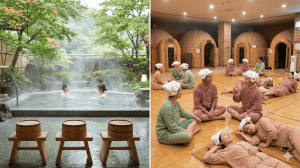
In Japan, sento and onsen offer communal bathing experiences centered on purification and mindfulness, often set in tranquil natural surroundings.
Korea’s jjimjilbang combines sauna rooms with relaxation spaces, promoting holistic wellness through heat therapy and social interaction.
These rituals encourage freedom of mind and body, fostering mental clarity and physical rejuvenation.
Together, they enrich global sauna traditions by blending cultural values with wellness principles rooted in East Asian heritage.
Russian Banyas and Turkish Hammams: Unique Cleansing Rituals
Steeped in centuries-old customs, Russian banyas and Turkish hammams offer distinctive approaches to sauna culture that emphasize both purification and social communion. Russian banyas feature intense heat and steam, often combined with birch branch massages to invigorate the body and promote detoxification.
Turkish hammams focus on rhythmic cleansing rituals involving exfoliation and soap massage within spacious, marble-clad steam rooms. Both traditions foster communal interaction, encouraging relaxation and connection.
These unique practices highlight sauna culture’s role beyond mere cleansing, serving as essential social and spiritual experiences that continue to inspire global sauna wellness rituals today.
How Traditional Sauna Culture Shapes Modern Wellness Practices
The communal and cleansing rituals found in Russian banyas and Turkish hammams have contributed to a broader appreciation of sauna culture worldwide. These traditions influence modern wellness by promoting holistic health and social bonds.
Many modern wellness studios now combine traditional sauna rituals with infrared technology to improve comfort and accessibility. Visitors interested in modern infrared sauna therapy can explore more here: https://www.revibe.my/infrared-sauna
Contemporary practices often emphasize:
- Detoxification through heat and steam
- Mindful relaxation and stress relief
- Social connection and shared experiences
- Integration of natural elements like herbs and stones
- Ritualistic cleansing as a path to mental clarity
Such elements underscore how traditional sauna culture shapes modern wellness, inviting freedom through physical renewal and communal harmony.
Conclusion
Sauna rituals across cultures reveal a shared human pursuit of relaxation, purification, and social bonding. From the Finnish sauna to Japanese baths, Korean jjimjilbangs, Russian banyas, and Turkish hammams, these practices embody centuries of tradition that balance physical health and mental wellbeing.
As modern wellness trends increasingly embrace holistic approaches, these diverse sauna customs continue to influence contemporary health practices, underscoring the enduring cultural significance and universal appeal of communal sauna experiences.